Key takeaways
- Hamptons is a palette discipline before it is a furniture list. Crisp white, one muted navy and one warm natural fibre will carry a living room further than any single piece you buy.
- The panelling is the tell. VJ boards, shiplap or a shaker profile on the joinery is what separates a Hamptons room from a plain white one.
- Keep the architecture, change the surfaces. House Design AI holds your walls, windows and proportions in place, so what you are judging is the finish rather than a different room.
- A full restyle is 10 credits and a targeted edit is 5, and you see the cost before anything runs.
What is a Hamptons living room?
A Hamptons living room is a coastal-classic look built on crisp white walls, usually panelled, pale oak floors and one muted navy running through the soft furnishings. Natural fibres do the warming: linen on the seating, jute or sisal underfoot, rattan or cane on one or two pieces. Everything else stays quiet.
The style borrows from American beach houses, but the reason it has settled so comfortably into Australian homes is practical rather than sentimental. It suits bright rooms and it forgives busy ones. A living room that has to hold a television, a bookshelf, a dog and a pile of toys still reads calm in this palette, because the noise sits against white rather than against another colour.
It is also one of the easier styles to do badly. Push the navy too far and the room turns nautical. Add too many patterns and it turns fussy. The version that works is closer to restrained than decorative, and most of the decisions below are about taking things out.
The Hamptons palette and materials
Read that palette left to right and you have the whole recipe. Soft white is the ground, on the walls and most of the joinery. Dove grey and pale sky do the middle work, on upholstery, cushions and anything you want to recede. Jute is the warmth, which is the part people skip and then wonder why the room feels cold. Muted navy is the one dark note, and it should be one note, not four.
Materials matter as much as the colours. Honed white marble-look stone rather than polished. Brushed nickel rather than chrome. Woven natural fibres rather than synthetics that mimic them, because the texture is doing real work at close range. Glass and mirror are useful in small doses to keep the room from reading flat.
If you want a shortcut, pick the white first and commit to it everywhere, then allow yourself exactly one navy and one natural fibre. A living room built that way is already most of the way there before you have chosen a single piece of furniture.
7 Hamptons living room ideas
1. Panel one wall, even if you never do the rest
VJ boards or shiplap on the wall behind the sofa gives the room a Hamptons signature at a fraction of the effort of doing the whole space. It reads as architecture rather than decoration, which is exactly what the style wants.
Keep the boards vertical and the paint finish matte or low sheen. A satin or gloss panelled wall bounces hard light and looks like a rental fit-out rather than a considered one.
If the room already has picture rails or a chair rail, work with them instead of covering them. The panelling below a rail and flat plaster above is a genuinely old detail, and it stops a modern room from looking pasted on.
2. Anchor the room in navy and white
One deep navy element in an otherwise white room does more than three mid-blue ones. A navy sofa, a navy island of joinery, or navy on the built-in shelving behind everything else gives the eye somewhere to land.
The mistake is spreading the navy around evenly. Navy sofa, navy cushions, navy rug and navy lamp base cancel each other out and the room reads busy rather than anchored.
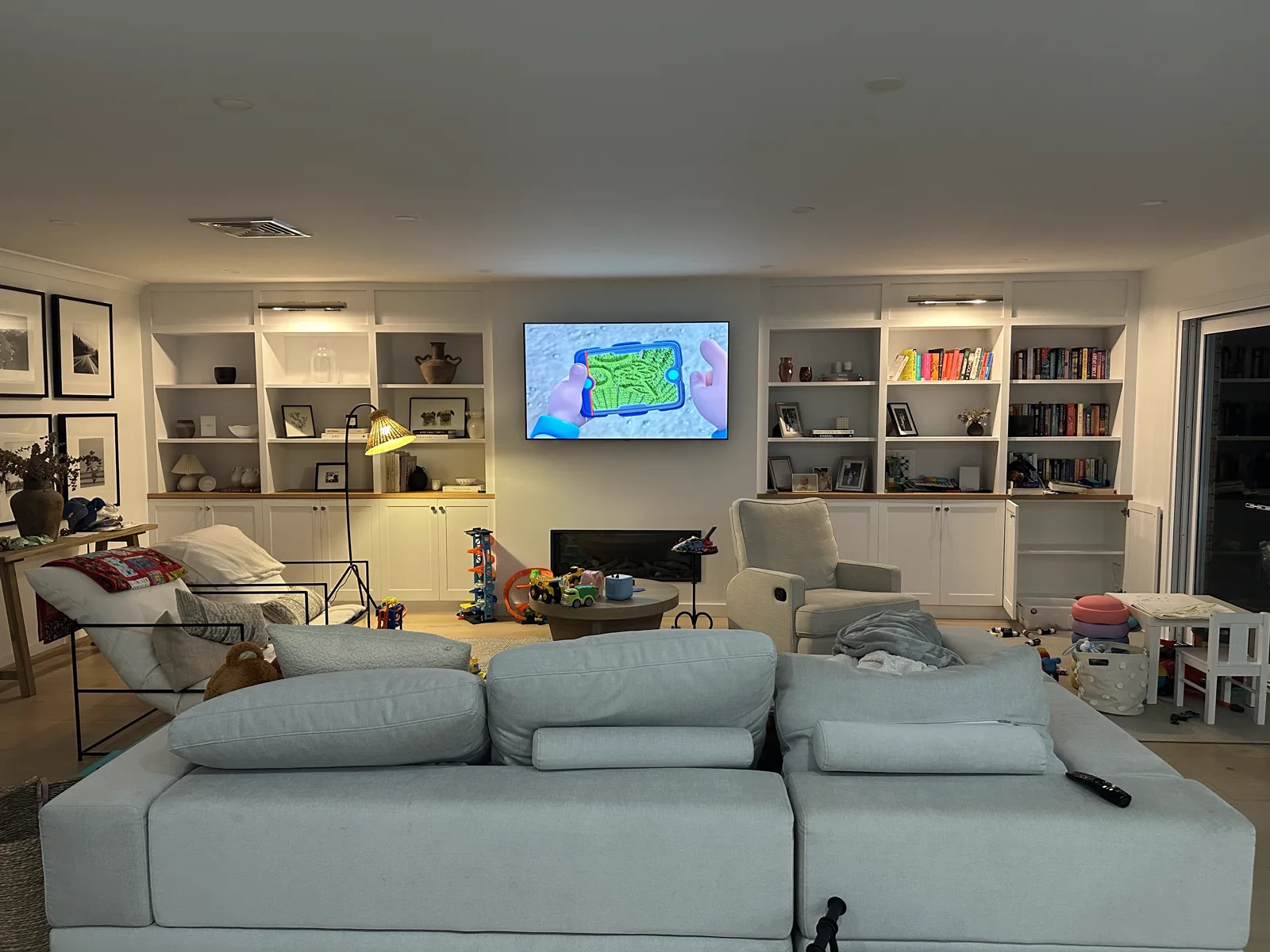
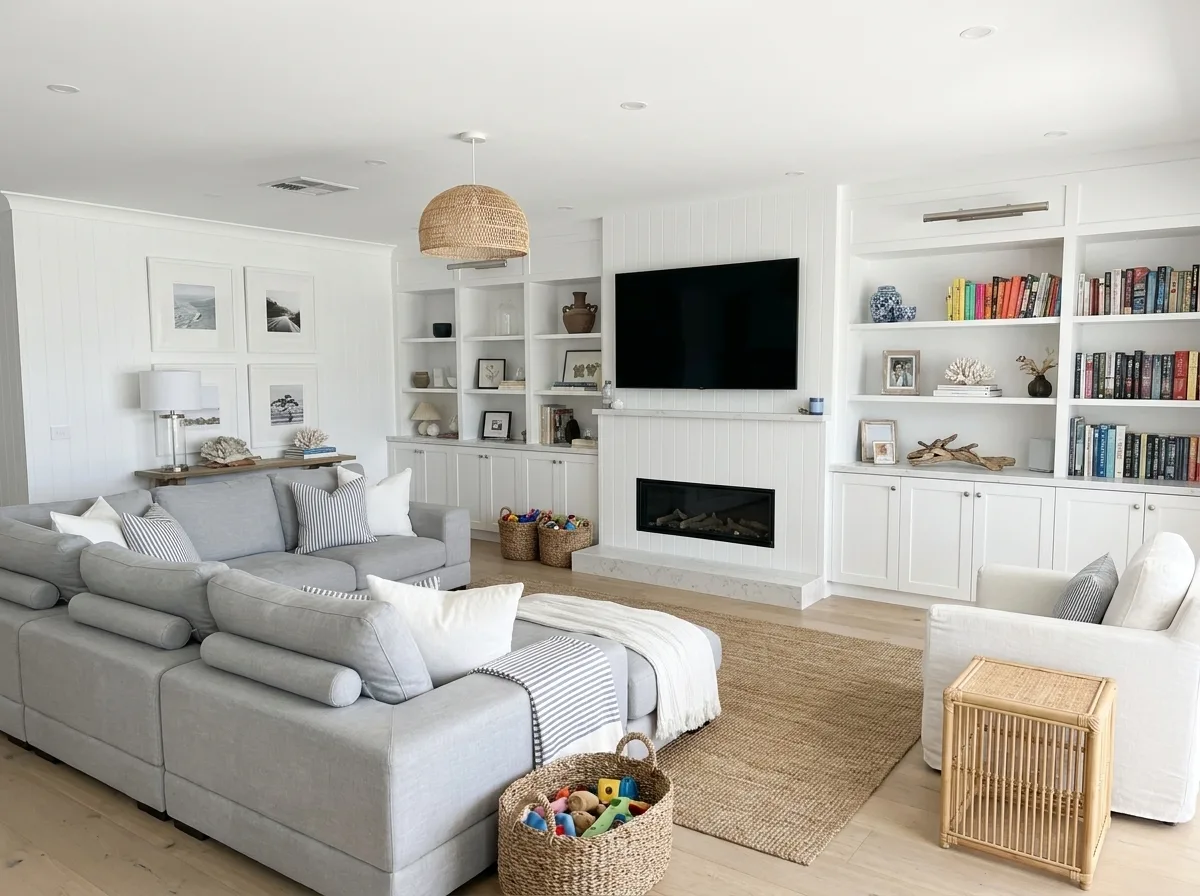
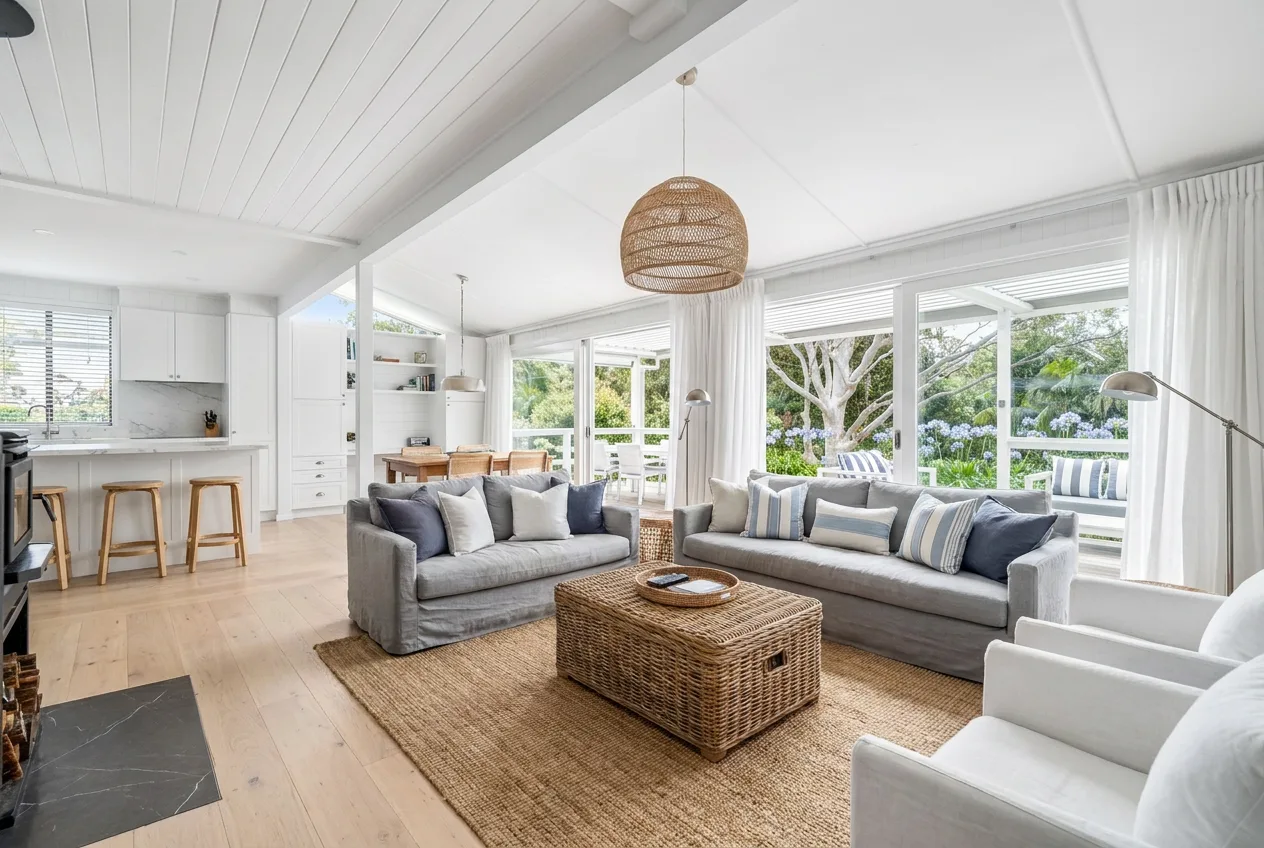
Look at what stayed. The built-in shelving is in the same place, the television is on the same wall and the room is the same shape. What changed is the wall treatment, the seating, the rug and the light, which is the honest way to judge whether a style suits a room you actually live in.
3. Slipcover the sofas in washed linen
Loose covers in washed white or oatmeal linen are the most Hamptons thing you can do to a sofa, and they are also the most practical. They come off, they wash, and they get better as they soften.
Choose a cover that is cut generously rather than tightly upholstered. The slightly relaxed line is the point: it is what keeps the room from tipping into formal.
If white feels like a risk with children or pets, oatmeal and dove grey both sit inside the palette and hide far more. The style survives the substitution; a mid-tone beige with a yellow base does not.
4. Put a jute or sisal rug under everything
A large natural fibre rug is the fastest way to warm a pale room without adding a colour. It also solves the most common living room layout problem, because a rug big enough to sit under the front legs of every seat visually pulls the furniture into one group.
Jute is softer underfoot and slightly warmer in tone. Sisal is flatter, harder wearing and reads more tailored. Either works, but going too small is the real error, and a rug that floats in the middle of the floor makes the room look smaller than it is.
See your own living room in Hamptons before you buy the rug Upload one photo and get it back in about a minute.
Upload a photo5. Lay pale oak floors, wide and matte
Wide pale oak boards are the floor this style was designed around. They keep the room bright, they take the jute rug without arguing with it, and they read warm where a grey floor reads cold.
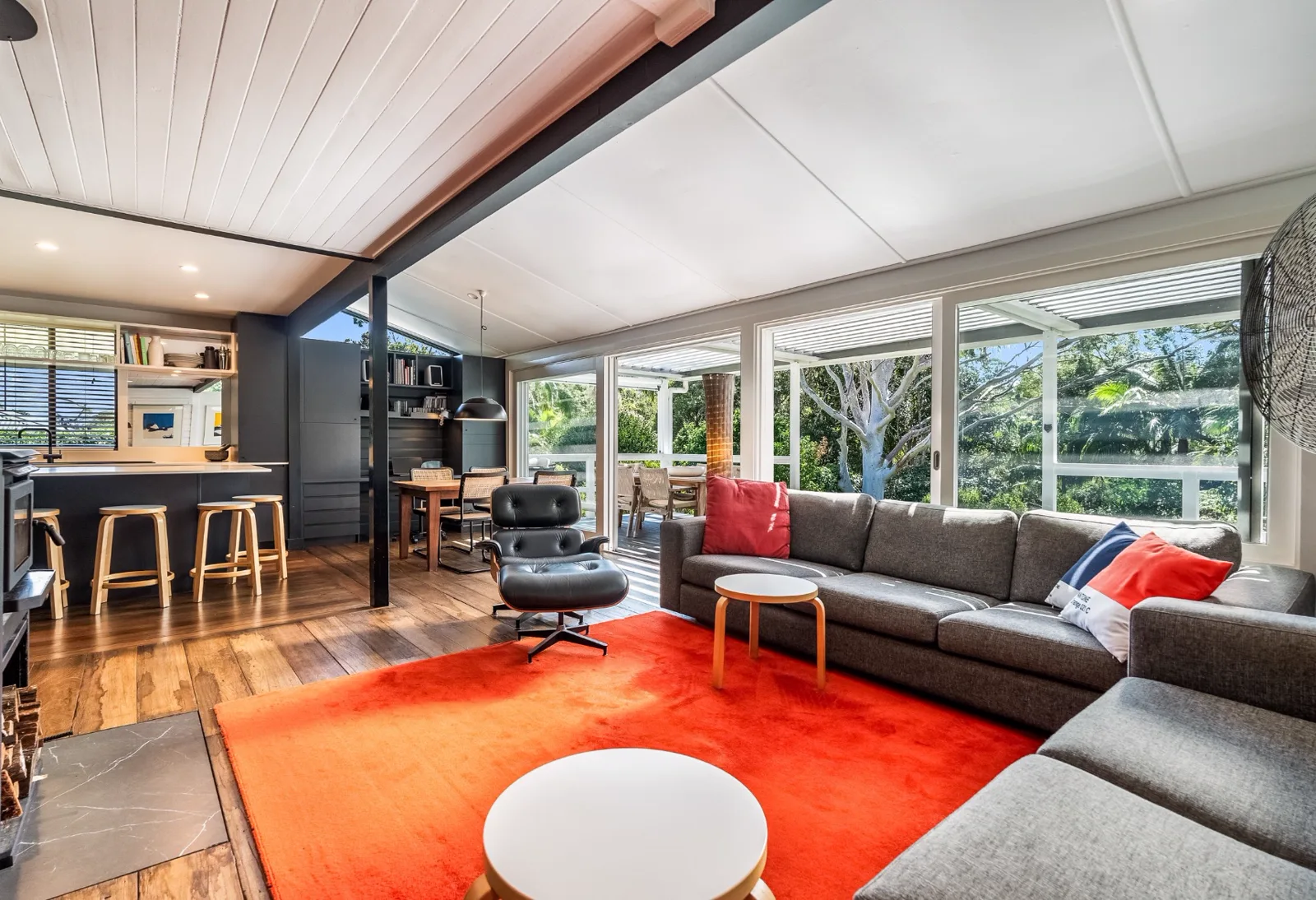
Carpet is not disqualifying, and in a room you use at night it can be the better answer, but it needs to be a pale wool or a sisal look rather than a mid grey. Grey carpet is the single finish that most often stops a room from resolving into Hamptons.
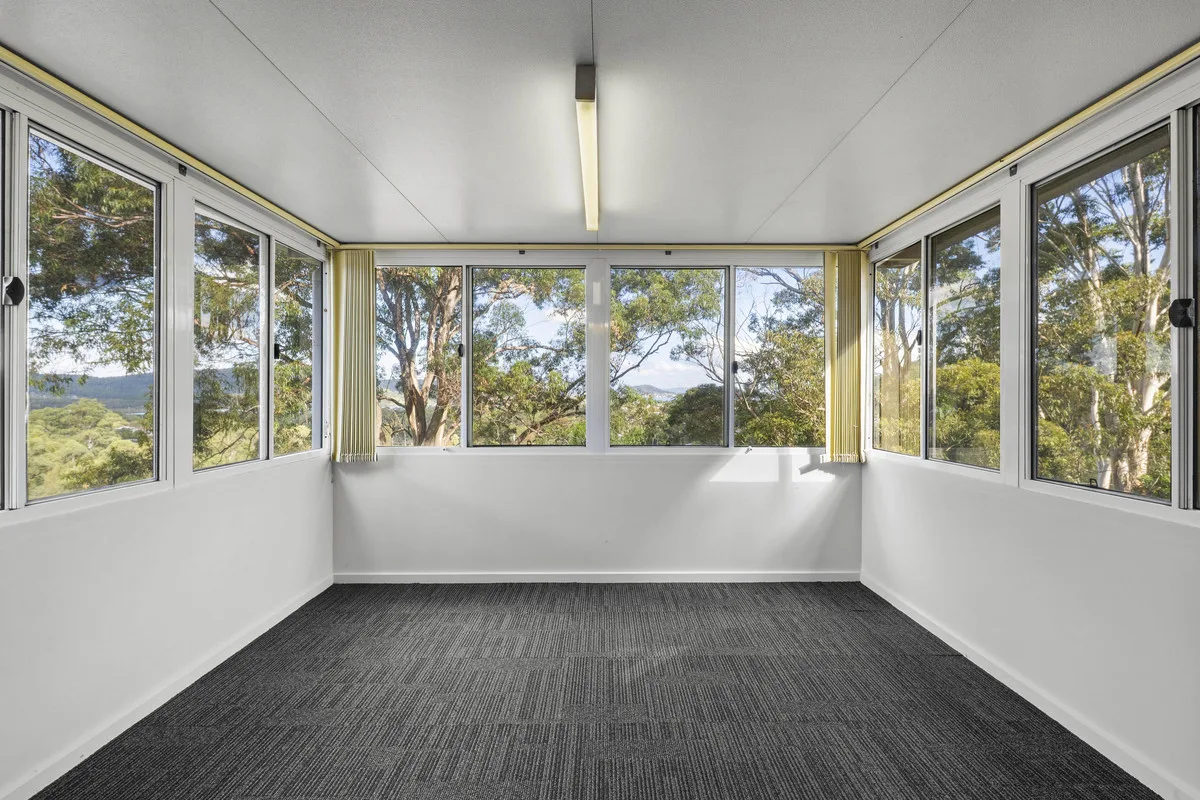
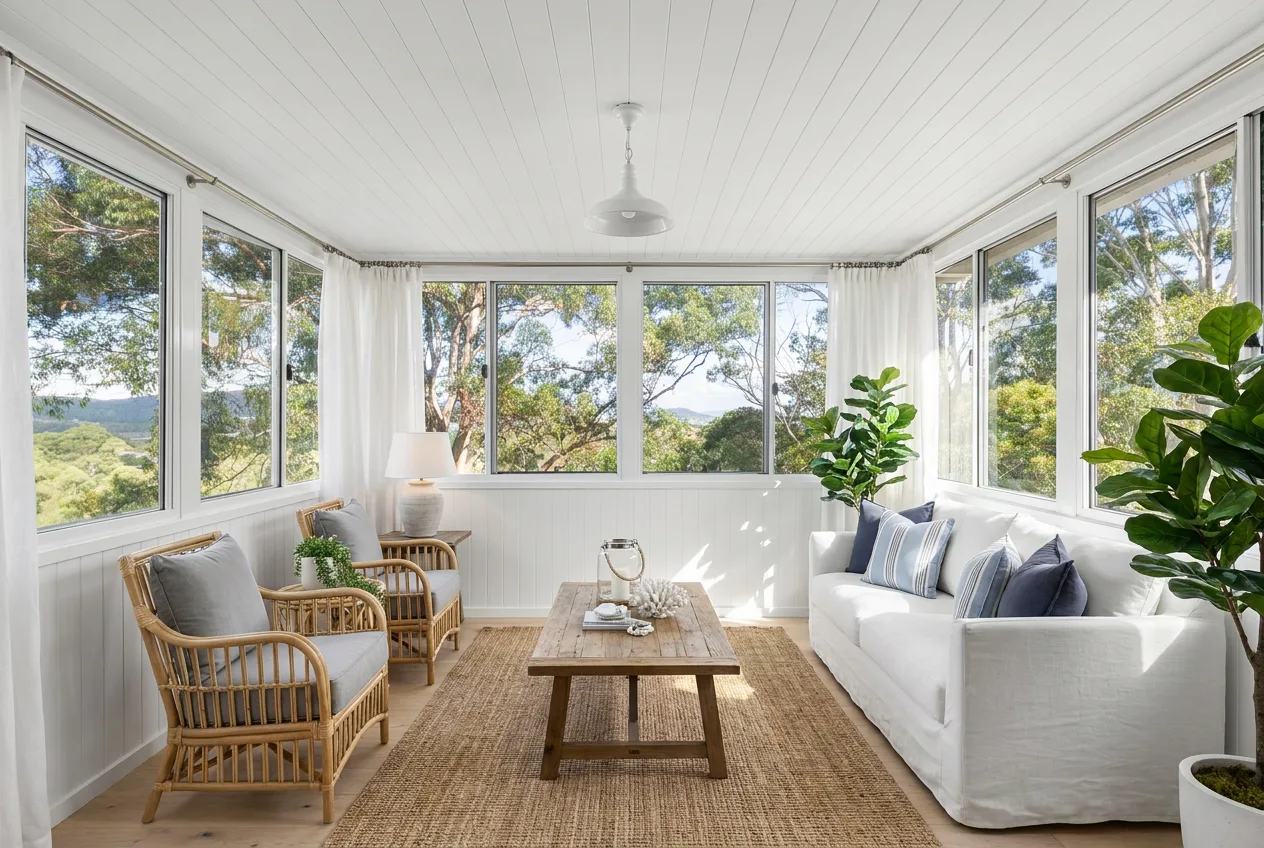
The sunroom above is the case for the change in one image. Same windows, same treetop outlook, same proportions. Once the grey carpet gives way to pale oak and the walls pick up the panelling, the light in the room has something to work with.
6. Mix brushed nickel with rattan and cane
Brushed nickel is the Hamptons metal. It is softer than chrome and cooler than brass, and it keeps lamps, handles and picture frames quietly in the background rather than making them a feature.
Set it against rattan or cane on one or two pieces and the room stops feeling like a showroom. A cane-backed occasional chair, a rattan pendant or a woven basket beside the fireplace is usually enough.
Resist the urge to do both metals. Mixed brass and nickel is a fine idea in other styles, but here it muddies a palette that depends on being narrow.
7. Take the detail up to the ceiling
Most living rooms stop decorating at picture height, which is why so many otherwise correct Hamptons rooms feel unfinished. A coffered ceiling is the full-strength version, and beadboard is the achievable one.
If neither is on the table, paint the ceiling the same soft white as the walls rather than a stark builder white, and hang the pendant or fan lower than you think. Both moves pull the top of the room back into the composition.
Cornices are worth keeping if you have them. A simple stepped profile in the same white is period-correct for most Australian homes and costs nothing to leave alone.
What it costs
Trying Hamptons on your own living room in House Design AI is a full restyle, which is 10 credits for that room.
If a version is close but not quite right, a targeted edit is 5 credits. That is the one to use when you want to change the flooring, repaint a wall or remove a piece of furniture without regenerating the whole room from scratch.
Credit packs are bought in the iOS and Android app, and the balance is shared with the web app, so credits you buy on your phone are there when you open the site on a laptop. Credits never expire and there is no subscription.
Hamptons vs Coastal: what is the difference?
| Hamptons | Coastal | |
|---|---|---|
| Base palette | Crisp white with muted navy | Sandy beige with soft white |
| Timber | Pale oak, often painted or limed | Blonde, weathered, driftwood tones |
| Pattern | Stripes, checks, panelled joinery lines | Little pattern, texture instead |
| Accents | Brushed nickel, glass, rattan | Aged brass, rope, ceramics |
| Feel | Tailored, classic, quietly formal | Casual, sun-bleached, barefoot |
Hamptons living room FAQ
Does Hamptons work in a small living room?
Yes, and often better than people expect, because the palette is mostly white and pale blue, so light bounces around a small room instead of being absorbed. Keep the panelling simple and the furniture legs visible so the floor reads as one continuous surface. The things that make a small Hamptons room feel closed in are heavy pelmets and deep, skirted sofas, so leave those out.
What flooring suits a Hamptons living room?
Wide pale oak boards with a matte or limed finish are the classic choice, because they keep the room bright without going stark. Pale wool or sisal carpet suits a room you want quieter, and a large jute rug over timber gives you both at once. Dark stained timber fights the palette and is the most common reason a Hamptons living room ends up feeling heavy.
Can I see Hamptons on my own room before buying anything?
Yes. Upload one photo of your living room in House Design AI, choose Hamptons, and you get that room back with its walls, windows and proportions kept exactly as they are. A full restyle costs 10 credits, and you see the cost before anything runs.
Is Hamptons the same as Coastal?
They are close cousins, not the same thing. Hamptons is the more tailored of the two, built on crisp white panelling, muted navy and brushed nickel, with stripes and checks doing the pattern work. Coastal is looser and sandier, built on beige, weathered timber and rope, using texture where Hamptons uses pattern.
Written by the House Design AI team
Every guide is written by the people building House Design AI and checked against what the app actually does before it is published. When the app changes, the guide is updated and the date above moves.
See every featureHamptons in other rooms
Other living room styles
Your room, this style
Stop imagining it. See it.
Upload one photo of your living room and get a Hamptons version in about a minute. Walls, windows and proportions stay exactly as they are.